The Anti-Money Laundering Regulation (AMLR) is the cornerstone of the EU’s new AML/CFT framework, introducing a directly applicable Single Rulebook across all Member States. Applying from 10 July 2027, AMLR introduces an expanded scope of obliged entities, enhanced governance requirements and new Customer Due Diligence (CDD) obligations, representing one of the most significant reforms to the EU’s AML/CFT regime in recent years.
As discussed in our latest article, the EU’s new AML/CFT Package establishes a harmonised regulatory framework designed to strengthen the fight against money laundering and terrorist financing across the European Union.
At the heart of these reforms is the Anti-Money Laundering Regulation (AMLR), which introduces directly applicable and harmonised requirements across Member States, reducing regulatory divergence and creating a more consistent approach to AML/CFT compliance.
This article explores some of the most significant operational changes introduced by AMLR and what they mean for financial firms.
AMLR Expands the Scope of Obliged Entities
AMLR expands the categories of entities subject to AML/CFT obligations, reflecting the evolution of financial services and emerging money laundering risks.
New categories of obliged entities include:
- Crypto-Asset Service Providers (CASPs), as defined under MiCA;
- Crowdfunding service providers and intermediaries;
- Certain mortgage credit intermediaries and consumer credit providers;
- Operators and service providers linked to EU residence investment schemes;
- Traders in certain high-value goods, including jewellery, luxury vehicles, aircraft, boats and precious metals; and
- Football agents and professional football clubs in relation to certain transactions.
For newly captured entities, AMLR introduces comprehensive AML/CFT obligations, requiring the implementation of appropriate governance arrangements, customer due diligence procedures and internal controls.
AMLR Governance and Internal Control Requirements
AMLR places greater emphasis on governance, accountability and effective internal controls.
Among the key governance changes are:
- stronger governance arrangements;
- greater emphasis on conflicts of interest management;
- the introduction of an Independent Audit Function;
- enhanced group-wide AML/CFT compliance requirements; and
- clearer compliance responsibilities through the introduction of the Compliance Manager and its distinction from the AML Compliance Officer (AMLCO).
These governance reforms reinforce the expectation that AML/CFT compliance should be embedded throughout the organisation, with responsibilities clearly allocated between management oversight and day-to-day operational compliance.
We explore these governance changes, including the distinction between the Compliance Manager and AMLCO, in greater detail in our related article: AMLCO vs Compliance Manager: Understanding AMLR’s New Governance Model.
AMLR Beneficial Ownership Requirements
AMLR also introduces important changes relating to beneficial ownership.
Among the most significant developments are:
- the beneficial ownership threshold changes from “more than 25%” to “25% or more”, while allowing lower thresholds in certain circumstances;
- firms must assess ownership interests and control in parallel when identifying beneficial owners; and
- obliged entities must report discrepancies identified between beneficial ownership information collected during customer due diligence and the information held in central beneficial ownership registers.
These changes are intended to improve the accuracy and reliability of beneficial ownership information across the European Union.
New Operational Requirements Under AMLR
In addition to governance reforms, AMLR introduces a number of operational changes that financial firms should begin assessing.
Key developments include:
- a €10,000 cash payment limit for goods and services;
- new requirements relating to the identification and verification of customers using virtual IBANs and associated bank or payment accounts;
- enhanced group-wide AML/CFT requirements;
- a new EU passport notification procedure for certain obliged entities; and
- clearer rules regarding the application of home-state and host-state AML/CFT requirements for cross-border activities.
Collectively, these changes will require many firms to review existing operating models, internal procedures and cross-border compliance arrangements.
AMLR Customer Due Diligence (CDD) Requirements
AMLR also introduces important changes to Customer Due Diligence requirements.
Among the key developments are:
- the CDD threshold for occasional transactions is reduced from €15,000 to €10,000;
- new CDD obligations apply to certain crypto-asset transactions of €1,000 or more and certain cash transactions of €3,000 or more;
- the Regulation introduces an EU definition of “linked transactions”;
- suspicious transaction reporting is expanded to include attempted transactions and other relevant information indicating suspicion;
- specific Enhanced Due Diligence (EDD) measures are introduced for certain cross-border correspondent relationships and transactions involving self-hosted wallets; and
- companies are prohibited from issuing bearer shares.
Together, these reforms significantly strengthen Customer Due Diligence obligations across the European Union.
Given the breadth of these changes, firms should consider how AMLR will affect their existing CDD frameworks, from customer identification and verification to ongoing monitoring and Enhanced Due Diligence.
We explore these requirements in greater detail in our related article: Customer Due Diligence under AMLR: What Financial Firms Need to Know.
How Should Financial Firms Prepare for AMLR?
Although AMLR will not begin to apply until July 2027, firms should use the transition period to begin assessing the impact of the new requirements.
As highlighted during Complyport’s recent webinar, organisations should focus on:
- Conducting a gap analysis against AMLR requirements.
- Reviewing and updating policies, procedures and business-wide risk assessments.
- Rebuilding Customer Due Diligence workflows.
- Reviewing monitoring, screening and customer review processes.
- Strengthening governance arrangements and compliance functions.
- Remediating existing customer files, testing updated processes and preparing for implementation.
Early preparation will allow firms to implement the required changes in a structured manner and reduce operational disruption ahead of the application date.
Looking Ahead: Preparing for AMLR in 2027
AMLR represents one of the most significant changes to the EU’s AML/CFT framework in recent years. By introducing a directly applicable Single Rulebook, strengthening governance requirements, expanding Customer Due Diligence obligations and harmonising AML/CFT requirements across Member States, the Regulation will reshape how financial firms manage financial crime compliance.
With the application date approaching, firms should use the transition period to identify gaps, prioritise implementation and ensure their AML/CFT frameworks are ready for the new requirements.
How Complyport Can Support AMLR Readiness
Preparing for AMLR requires more than updating policies. Firms should review governance structures, reporting lines, compliance functions and operating models to ensure they remain aligned with the Regulation’s enhanced governance requirements.
Complyport supports investment firms, payment institutions, electronic money institutions, crypto-asset service providers, fund managers and other regulated firms with:
- AMLR readiness assessments and gap analyses;
- AML/CFT framework assessments;
- Customer due diligence reviews;
- Compliance function effectiveness reviews;
- Board and senior management training;
- Policy and procedure redesign;
- Business-wide risk assessment updates;
- AMLR implementation programmes.
Our specialists work with firms to assess existing governance arrangements, identify areas requiring enhancement and develop practical implementation plans aligned with AMLR requirements.
To discuss how AMLR may affect your governance framework and compliance function, contact Complyport’s regulatory compliance team.
Table of Contents
Watch Our Recent Webinar
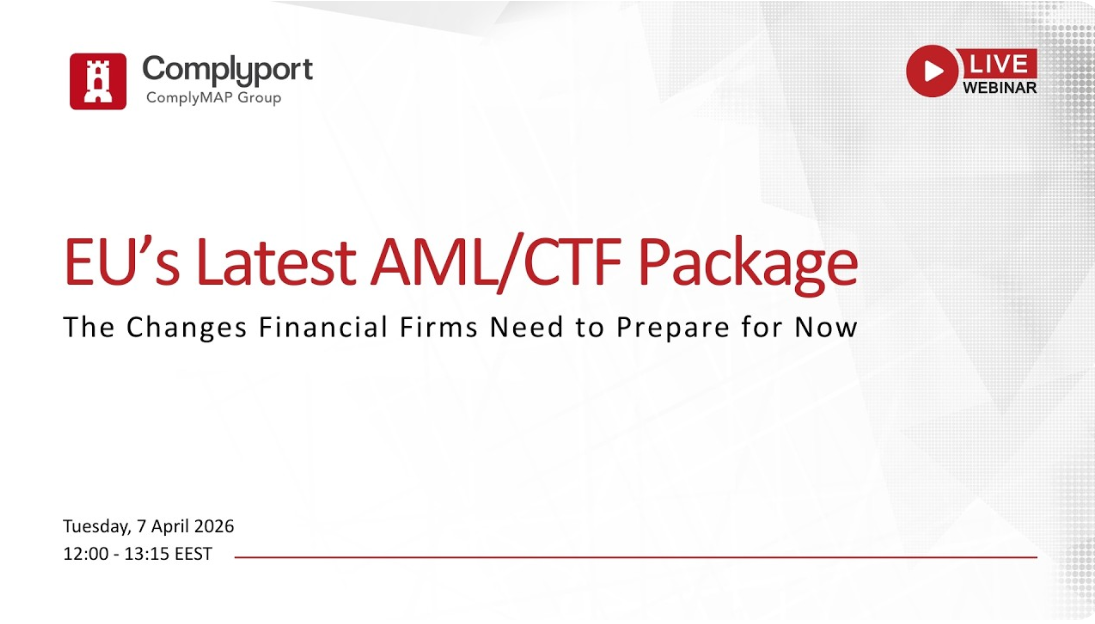
EU’s Latest AML/CTF Package
The Changes Financial Firms Need to Prepare for Now
For a deeper discussion of AMLR and the wider EU AML/CFT Package, watch our webinar:
Presented by Alexandros Constantinou, Senior Managing Director, Complyport EU, the webinar explores the key regulatory changes and the practical steps firms should begin taking ahead of AMLR’s application.

Subscribe for Exclusive Regulatory News and Updates
Receive the latest regulatory developments, expert insights, practical compliance guidance and invitations to Complyport webinars and events.
Share this Article
Found this article useful? Share it with your colleagues and network.